
Grant Leslie
BackPetri

Petri

Music grows locally.

A music streaming app for finding local artists, seeing who is playing near you tonight, and talking music with the people in your scene.

Role
UX and UI designer
Class project
Team of 5, 12 weeks, fall 2024
Redesign
Rebuilt in 2026
Platform
iOS app
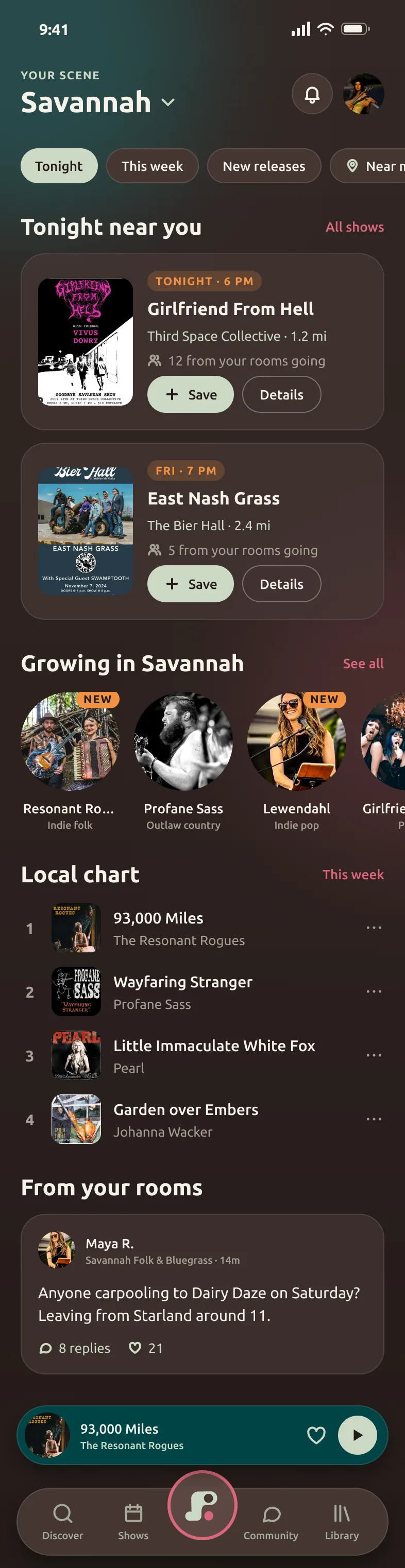
Petri Home screen. Tonight near you, artists growing in Savannah, the local chart and your rooms.

Try scrolling the Home screen in the middle phone.

The 30 second version

Problem

Small local artists get buried on streaming apps, and listeners piece local music together from Instagram, flyers and friends.

Insight

Discovery is social and local, but streaming apps are neither.

What Petri does

Puts your city first: tonight's shows, a local chart, rooms to talk music in, and tools that show artists who is listening.

Part 1The 2024 class project

The problem

Local music is hard to find, and even harder to be found in

For listeners

Mainstream apps recommend what is already popular. To find out who is playing nearby, people piece it together from Instagram, flyers in coffee shops and word of mouth.

For local artists

Small artists upload to the same platforms as everyone else and get buried. Promotion means hours on social media, and they rarely hear back from the people who do listen.

“I think that local artists being accessible on platforms that larger artists are featured on would be awesome to see.”
Marshal, 24, musician in Asheville, NC

Research

What 39 listeners and 2 musicians told us

We surveyed listeners, interviewed two working musicians and reviewed six apps people already use for music and community. That became three findings and the persona we designed for.

39

survey responses, average age 21

2

interviews with small musicians

6

music and social apps reviewed

3

findings that shaped every decision

01

Survey

39 responses, average age 21. We asked how people listen, how they find new music and local bands, and what they wish their apps did.

Streaming app used

  • Spotify23
  • Apple Music10
  • YouTube Music3
  • Pandora2
  • Amazon Music1
  • SoundCloud1

Number of respondents, out of 39

Highlighted answers led to our three findings:

  • Finding 1 Discovery happens through people
  • Finding 2 Local music has no home
  • Finding 3 Artists live on shows, not streams

76.9%

pay for a streaming subscription

69.2%

organize their music by favorites, mood, artist, month or genre

How they find new music

  • Curated and suggested playlists
  • FriendsFinding 1
  • Social mediaFinding 1
  • Shuffle

How they find local bands

  • Social media
  • Friends and word of mouth
  • Posters
  • Coffee shops
  • Openers at concerts
  • Friends in bands
  • “Don't know where to find but open”Finding 2

What they dislike about current apps

  • Suggestions that miss
  • Ads
  • Monthly fees
  • Bad sound quality
  • “Not easy to share with friends”Finding 1
  • “Artists aren't supported enough”Finding 3

Social features they want

  • DMsFinding 1
  • Connecting with people
  • Learning new music from peopleFinding 1
  • Seeing what friends listen to
  • Following friends or artists

Other features they want

  • Customization
  • Communicating with people
  • Free
  • Easy access
  • Privacy
  • Quick loading
  • Organizing and saving
  • No ads
02

Interviews

Two small musicians on how they promote their music, play shows and reach listeners.

Marshal, 24

Small musician in Asheville, NC

Phone interview, October 12, 2024

What we learned

  • Promotes his music through Instagram and word of mouth.
  • Said yes, he would use an app that promotes his shows locally.
  • Wants local playlists and charts by genre or aesthetic.
“I would say that feedback is hard to gather at all with music.”
“I think it's really important for a streaming platform to connect with your dates, merchandise... Larger apps like Spotify fail at this level of engagement.”
“Music brings people together, especially in local communities.”

Logan, 20

Small jazz musician in Winchester, VA

Written interview, October 13, 2024

What we learned

  • Promotion is mostly word of mouth. The hard part is making connections with venues and other musicians.
  • Promotes shows with Instagram stories and by texting friends.
  • Grows a local audience by getting to talk to listeners.
“With jazz live performance is far more valuable than recordings often times.”
“For artists the only real way to make money is through physical merch/CDs etc.”
“I have never met a full time artist that lives off of streaming alone.”
03

Competitors

Six apps people already use for music and community, and what we noted about each.

  • Spotify

    Unfair royalty rate for artists, and an algorithm that is hit or miss.

  • YouTube Music

    Hard to find people with taste in common.

  • SoundCloud

    Uploads without verification cause confusion.

  • Discord

    Strong communities, but no age verification.

  • Apple Music

    The second most used app in our survey, after Spotify.

  • Instagram

    Where both musicians already promote their shows.

The gap: none of them put local artists, local shows and conversation in one place.

04

What we found

Putting the survey, interviews and competitor review together, three findings stood out.

Finding 1

Discovery happens through people

Friends, social media and curated playlists were how respondents found new music. When we asked what social features they wanted, they listed DMs, following friends and artists, and seeing what friends listen to.

“Not easy to share with friends”
Survey, top dislikes about current apps
Finding 2

Local music has no home

People found local bands through Instagram, word of mouth, posters, coffee shops and openers at shows. Some said they did not know where to look but were open to it.

“Having a section dedicated to local music that's easily accessible for people that aren't really connected to the local scene would be super helpful.”
Marshal, 24, musician in Asheville
Finding 3

Artists live on shows, not streams

Both musicians promote shows by hand, with Instagram stories and texts to friends. Their income comes from shows and merch, and they have little way to hear from listeners.

“I have never met a full time artist that lives off of streaming alone.”
Logan, 20, jazz musician in Winchester
05

Persona

Who we designed for. Marshal is a listener and a small musician at the same time, so every flow had to work for both sides of him.

Marshal, the persona

Marshal, 24

Small musician and waiter in Asheville, NC

  • Listener
  • Musician

Marshal lives in a city full of local art and music. He likes finding and supporting small artists, plays live shows and releases his own music, but feels big platforms do not represent independent creators.

Motivations

  • Exposure for small artists
  • Support from his local community
  • Connecting concert goers and music fans

Frustrations

  • His songs get buried under major artists
  • Promotion eats hours on social media
  • Hard to hear back from the people who do listen

Journey map

What happens today when Marshal releases a song

  1. 1

    Upload

    Puts a new song on a big streaming platform.

  2. 2

    Buried

    It gets lost among major artists.

  3. 3

    Promote

    Spends hours pushing it on social media.

  4. 4

    Stall

    Engagement stays low.

  5. 5

    Search

    Starts looking for a platform that connects him with local listeners.

    This is where Petri comes in.

Insight

Discovery is social and local, but streaming apps are neither.

So every feature had to pass three principles, one for each finding.

01

Local first

Lead with what is happening in your city: tonight's shows, the local chart, artists growing nearby.

02

Community built in

Make sharing a song or a show as easy as a text, inside rooms for your scene.

03

Artists beyond streams

Tie every song back to the artist's next show, their room and a way to support them.

The team's mission: “Cultivate a tight knit community to share, listen, and discuss music interests.”

Visual direction

A culture that grows

A petri dish is where a culture grows and spreads. We saw local music the same way: it starts small, moves through a scene and changes as people share it. The team picked the name Petri out of ten ideas because it describes cultivating a listener's taste.

  • Discovery and intrigue
  • Tactile and present
  • Friendly and open
  • Colorful and tacky
  • Connected and different
A pink petri dish with a culture spreading across it

The starting image for the brand

Logo

Petri wordmarkPetri mark

Wordmark and app mark, carried over from the 2024 brand.

Type

Ubuntu

Picked from a study of 13 typefaces. Set in Regular, Medium and Bold.

  • Your scene is readyDisplay 36/40
  • Tonight near youTitle 28/34
  • Growing in SavannahTitle 22/28
  • Girlfriend From HellTitle 17/22
  • Third Space Collective, 1.2 miBody 15/22
  • 12 from your rooms goingCaption 13/18
  • Tonight, 6 PMLabel 11/14
  • 842 monthly listenersMicro 10/12

Color

Surfaces

  • bg 900#241B19App background
  • bg 800#322724Sheets
  • bg 700#453633Cards, fields, tab bar
  • bg 600#5C4742Raised controls

Text

  • Primary#F6F2EAHeadings and body
  • Sage#CCD8C5Secondary text, chips
  • Muted#A69E94Meta and captions

Brand

  • Pink#DB667BPrimary action, listener accent
  • Teal#119DA3Accents and glows
  • Deep teal#004346Mini player
  • Orange#F19143Artist mode, show and date tags

Where the dish shows up in the app

Your scene as a dish

Your scene as a dish

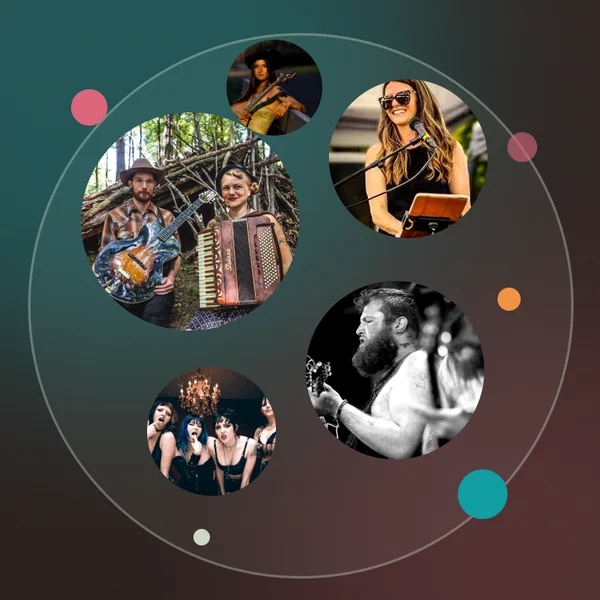
The welcome screen fills a dish with artists from your city.

Genres as cultures

Genres as cultures

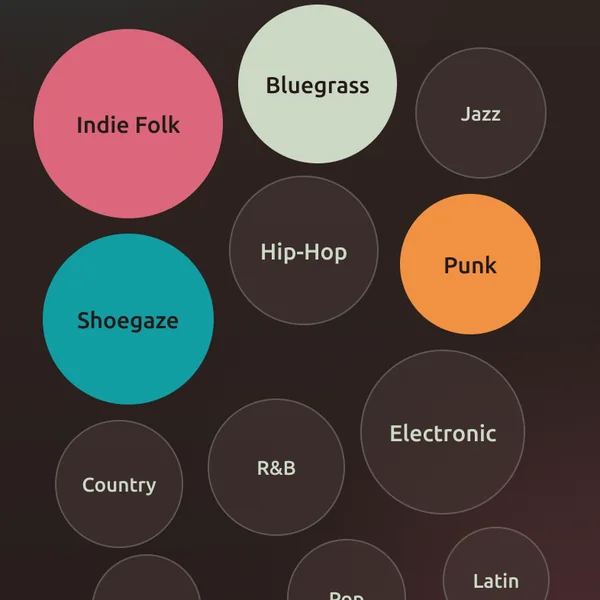
Onboarding uses round genre bubbles you tap to grow your feed.

Round artwork

Round artwork

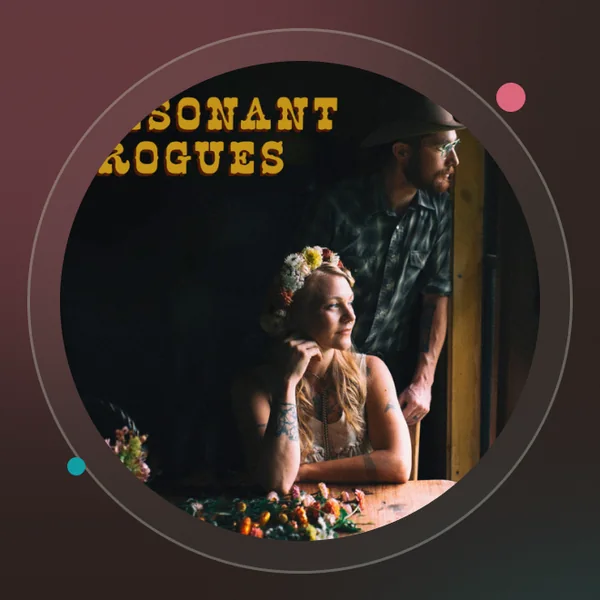
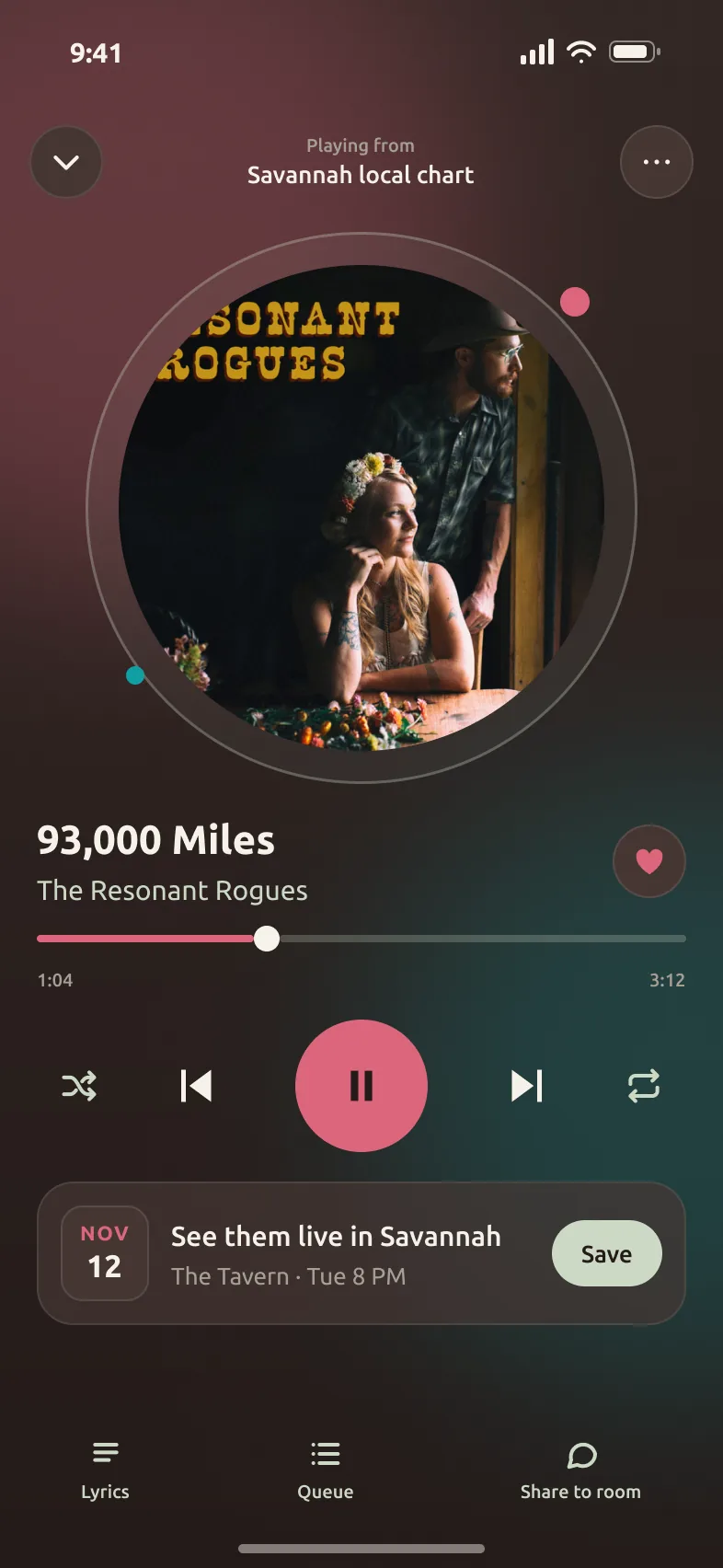
The player sets the album art in a dish, with small cultures around the rim.

Process

From three ideas to one app

  1. 01

    Concept

    We started with three ideas: a pantry tracker, a food community board and “Spotify but better.” We picked the third.

  2. 02

    Research

    A 39 person survey, two musician interviews, six competitors, a persona and a journey map.

  3. 03

    Sketches

    Low fidelity layouts for rooms, the calendar, artist pages and sign up.

  4. 04

    Mid fidelity

    Three passes at the core screens to work out layout, hierarchy and palette.

  5. 05

    2024 final

    High fidelity screens presented at the end of the 12 weeks.

  6. 06

    2026 redesign

    I went back and rebuilt the screens and flows, with every change tied back to the research.

Sketches

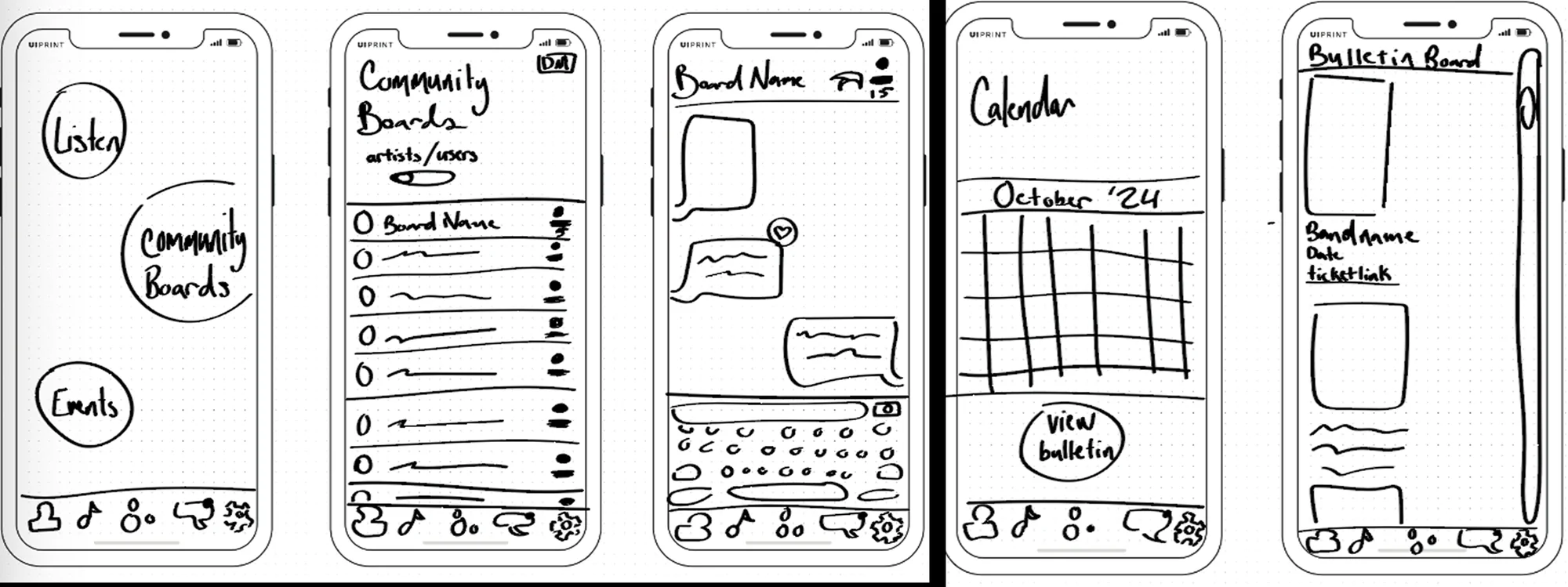
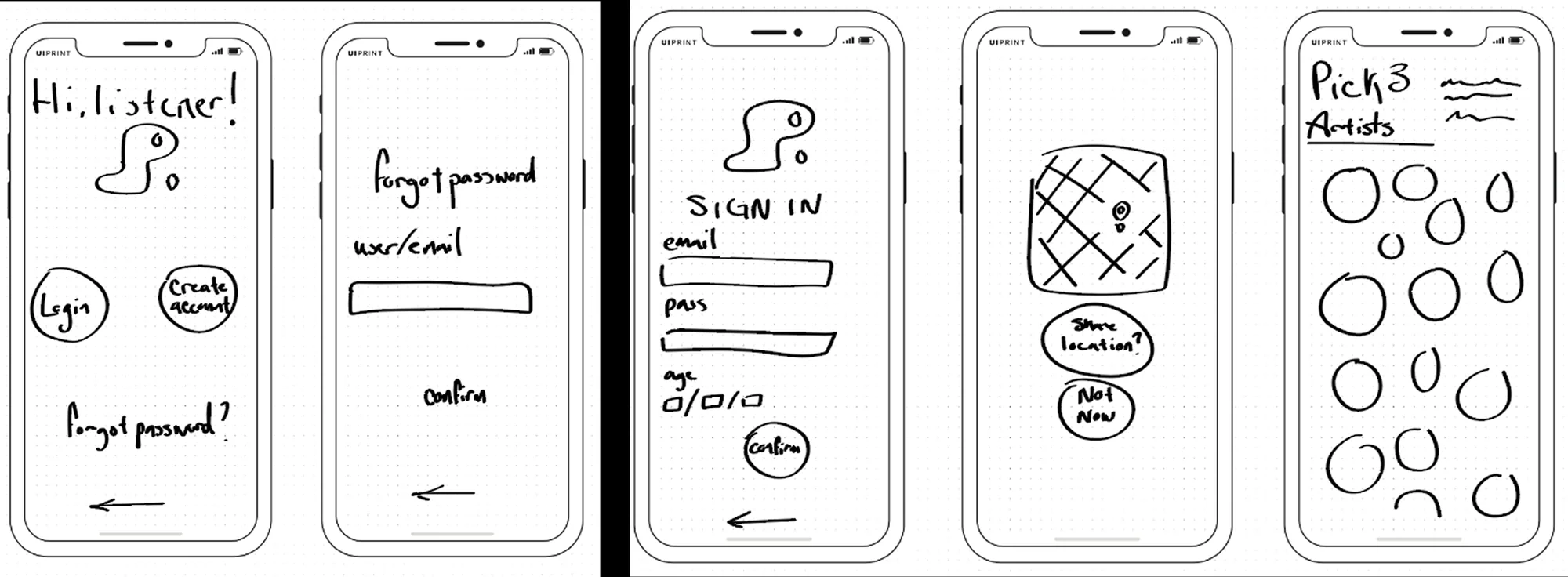
We started on paper: home, community boards, chat, a show calendar, a bulletin board, sign in and the pick three artists step.

Paper sketches of Petri screens, set 1Paper sketches of Petri screens, set 2

Mid fidelity

Three passes at the core screens (home, rooms, library, chat and sign up), each trying a different layout and palette.

Mid fidelity pass 1: home, rooms, library, chat and a bulletin board in teal and pink

2024 final

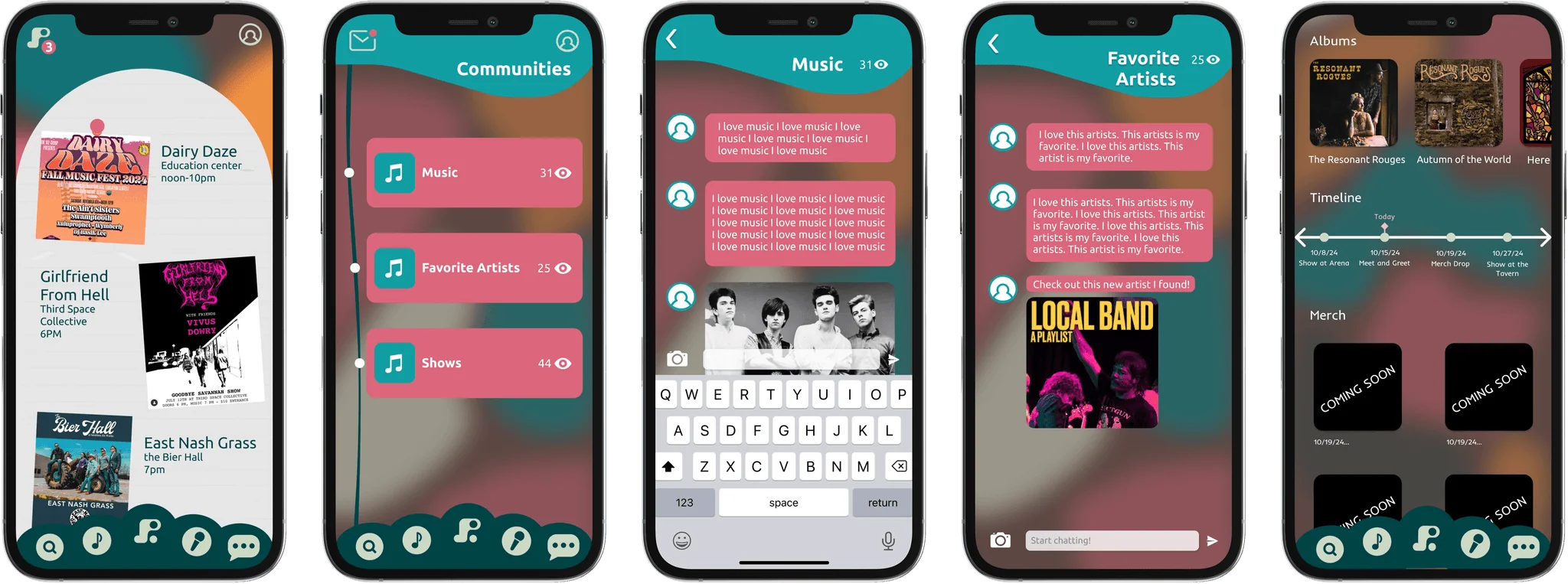
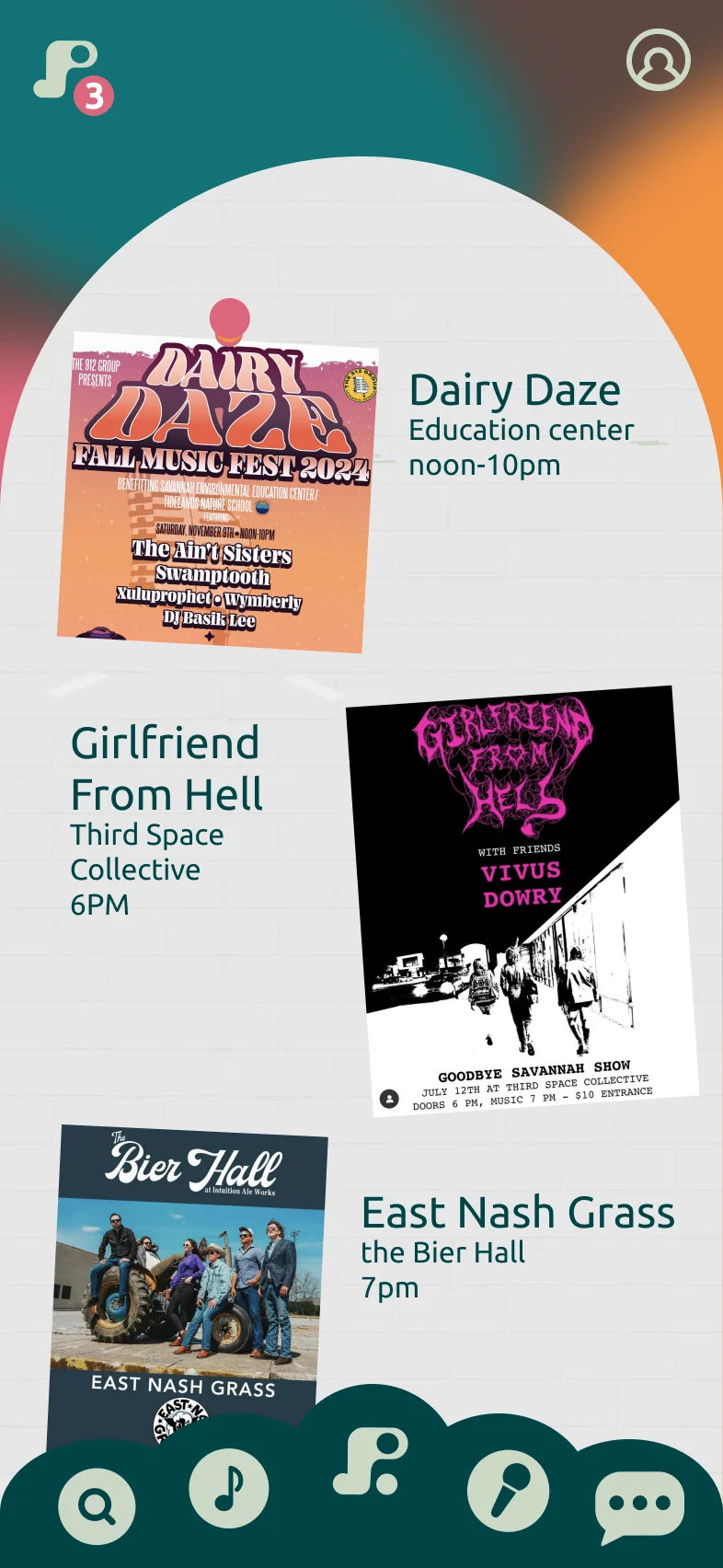
The screens we presented at the end of the class: wavy teal headers, color blur backgrounds and an icon tab bar.

2024 final screens: home poster collage, community list, chat room, favorite artists room and artist page

Looking back at the 2024 UI

The research held up. The interface did not always show it.

  • Four different fonts and sizes, so screens did not feel like one app.
  • Five icons in the tab bar with no labels, and shows tucked away on a calendar screen.
  • Separate sign in flows for listeners and artists, even though our persona is both.
  • Small text over busy blurred color, which made screens hard to read.
End of the 2024 class project

Part 2The 2026 revisit

Going back to Petri

Petri was one of the first projects I worked on, back when I was still learning. As I kept moving through my studies at SCAD, I learned a lot more, so I decided to go back and give Petri a revisit.

See what changed

Redesign decisions

Every change traces back to the research

I kept our research and brand, and rebuilt the UI and flows with one system for navigation, components and type. Every change below starts from something we heard.

Decision 1 of 10: Shows get their own tab

01 / 10

Principle 1 · Local first

Decision 1 of 10

Shows get their own tab

2024
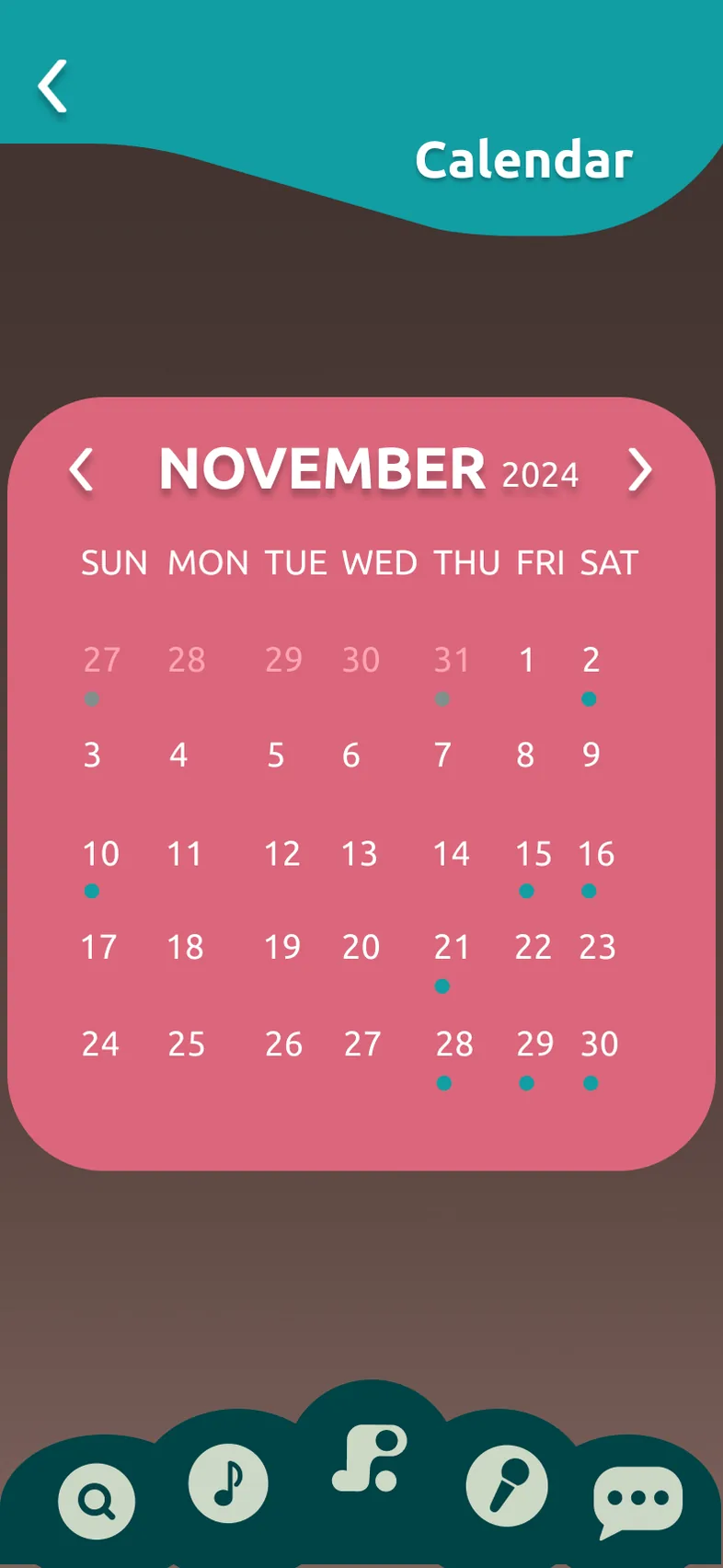
Shows lived on a calendar screen, and the tab bar was five unlabeled icons.
2026
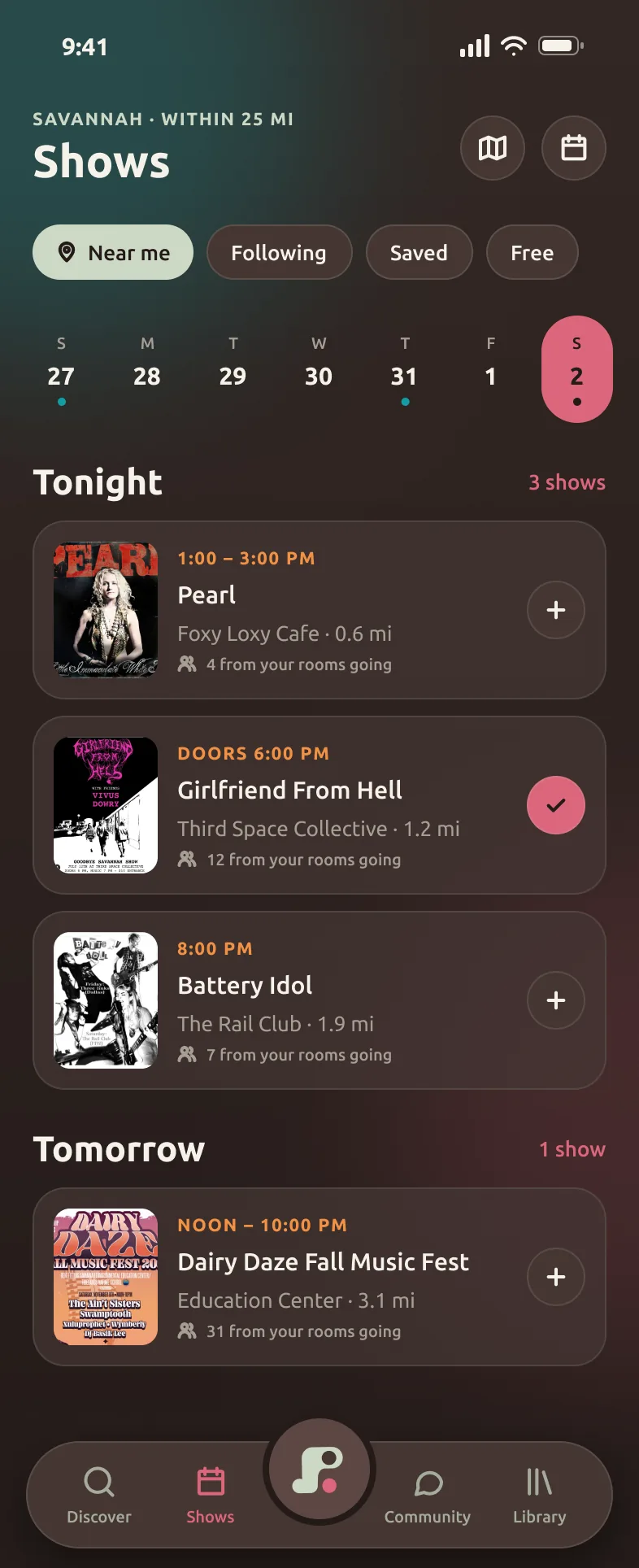
Discover, Shows, Home, Community and Library, all labeled. Shows opens on tonight.

Why: Respondents found local bands through posters and word of mouth, and some did not know where to look at all. Logan told us that in jazz, live performance is often worth more than recordings.

2024 calendar screen with a month grid and an unlabeled icon tab bar2026 Shows screen. A week strip and tonight's shows, each with how many people from your rooms are going.

Final screens

37 screens across 7 flows

Pick a flow, then swipe or use the arrows. Long screens scroll inside the phone, like the real app.

From a first open to a local feed in eight screens, ending on the scene it built for you.

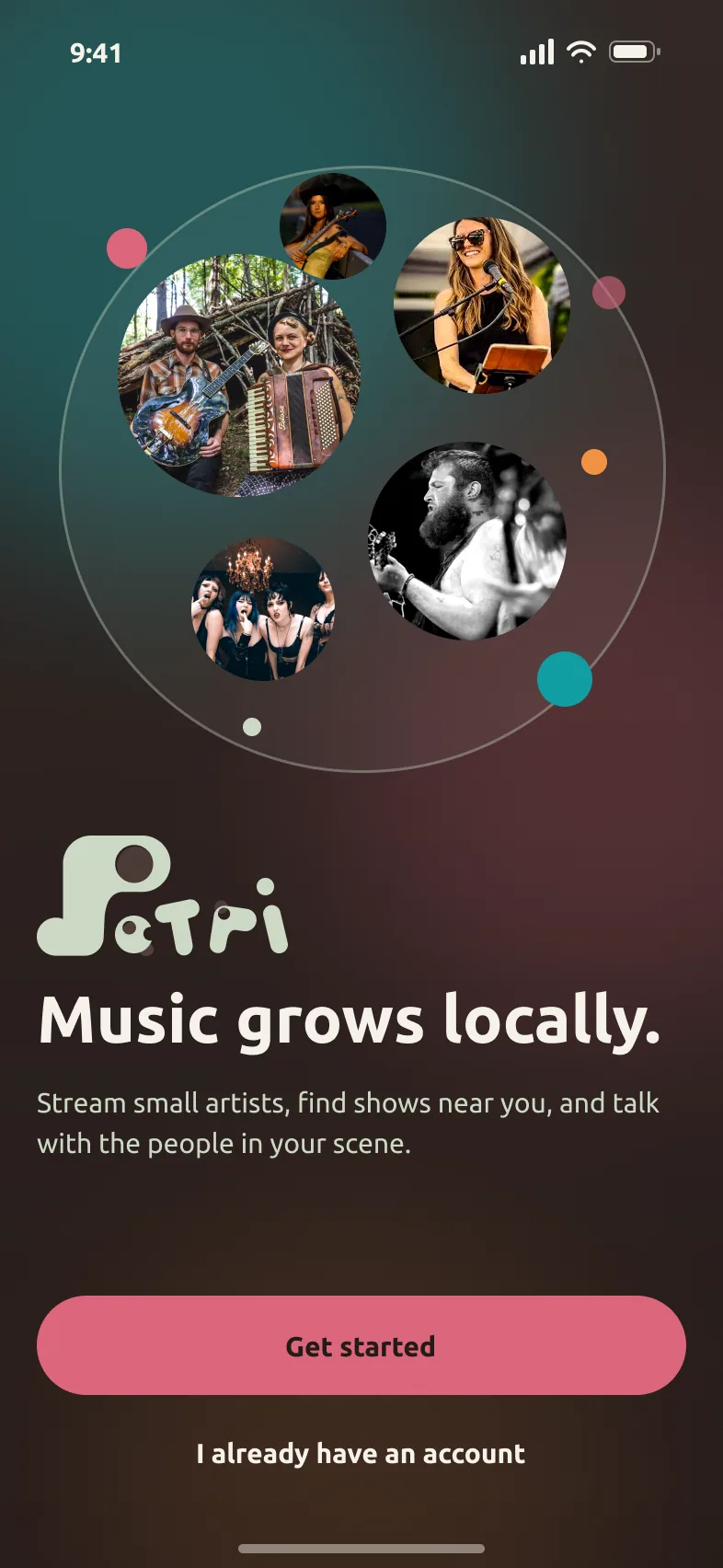
Petri Welcome screen. The dish holds artists from your city. Music grows locally.

1.1Welcome

The dish holds artists from your city. Music grows locally.

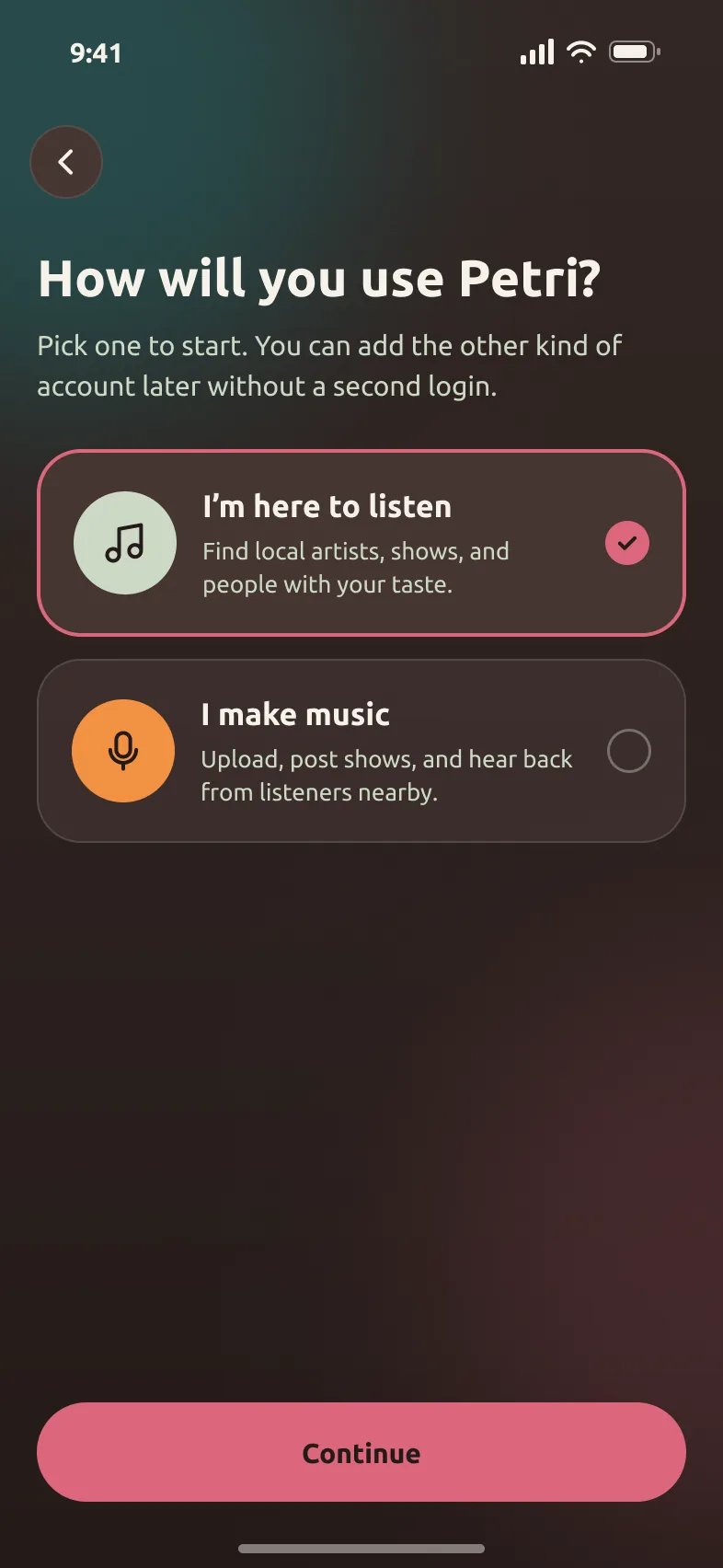
Petri Choose role screen. Listener or musician, picked once. Add the other later with the same login.

1.2Choose role

Listener or musician, picked once. Add the other later with the same login.

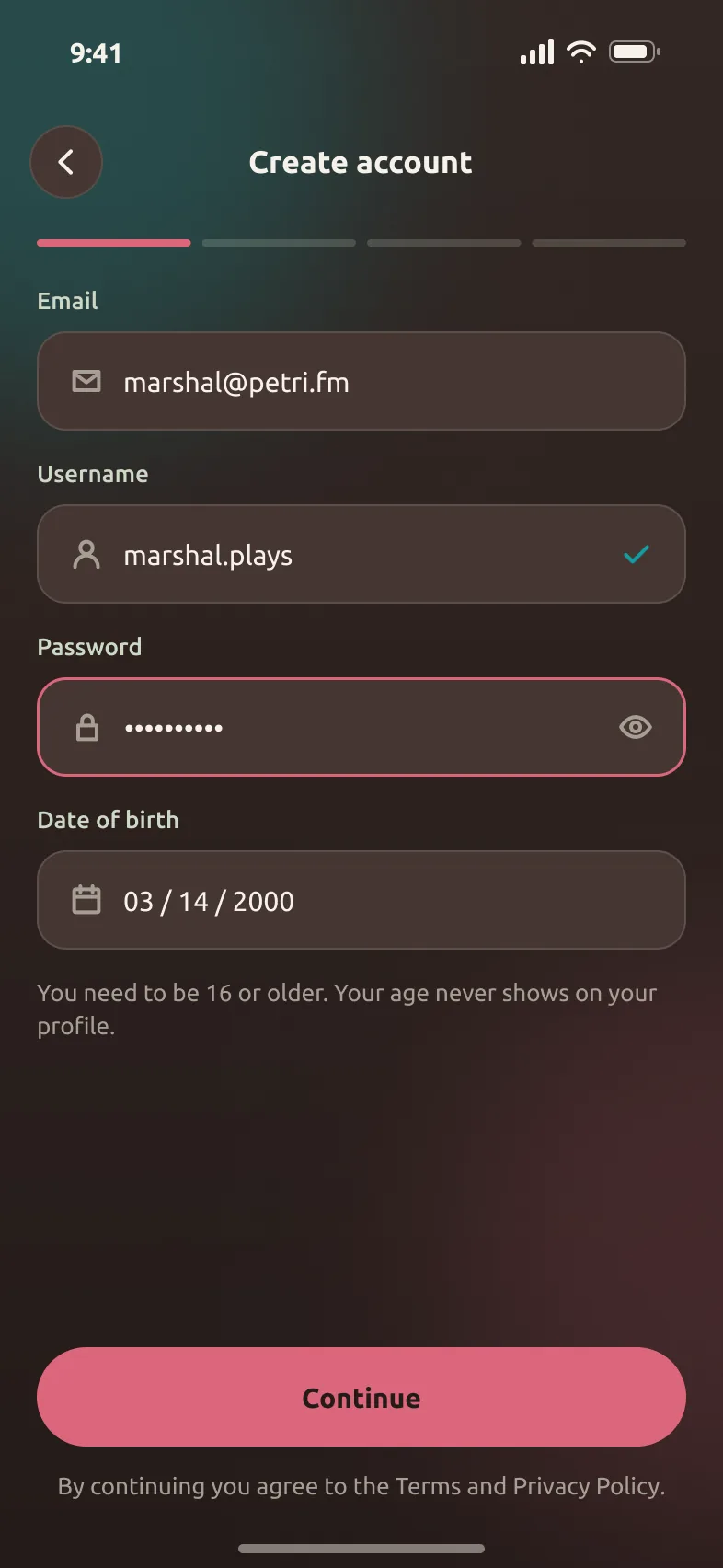
Petri Create account screen. The 16+ age gate says why it is there and that your age stays private.

1.3Create account

The 16+ age gate says why it is there and that your age stays private.

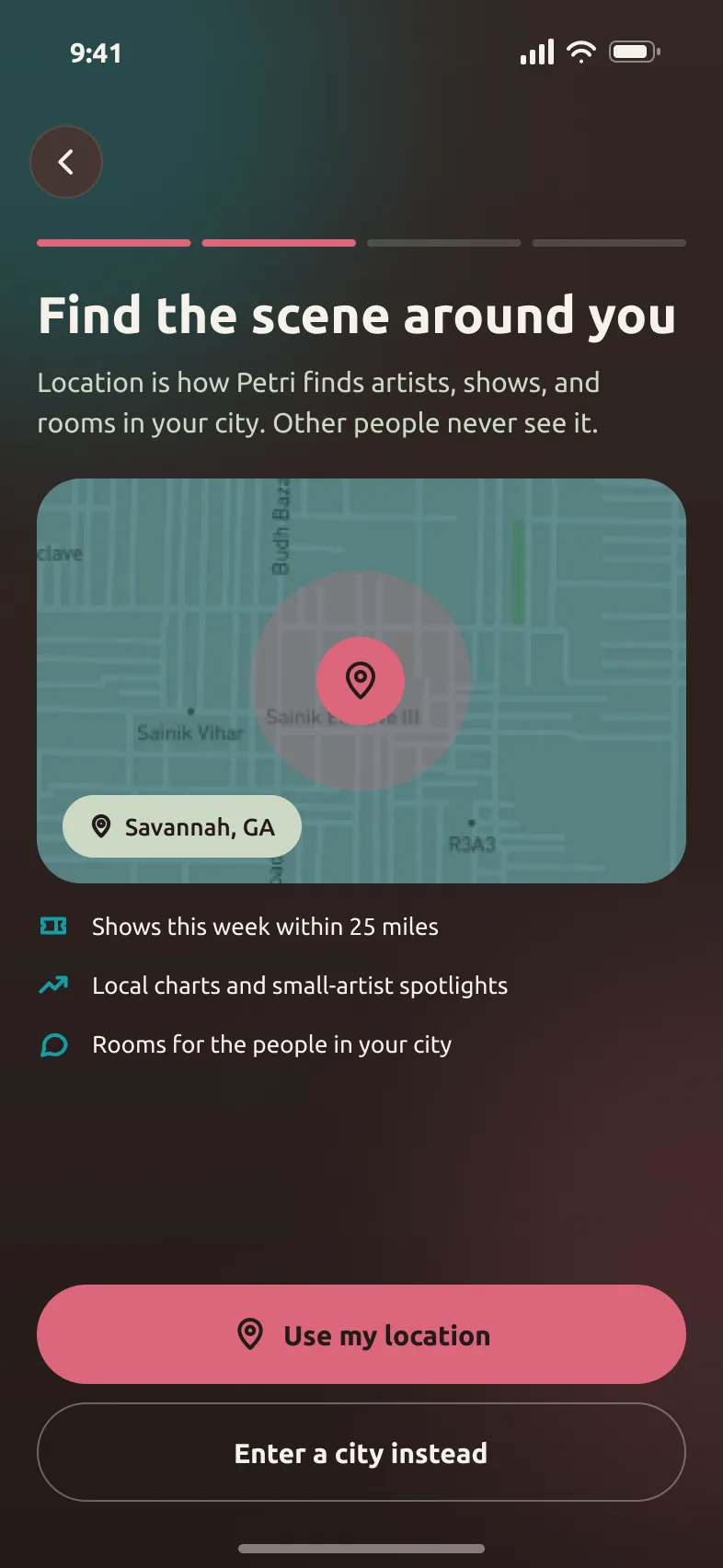
Petri Location screen. Explains what location is for and that other people never see it.

1.4Location

Explains what location is for and that other people never see it.

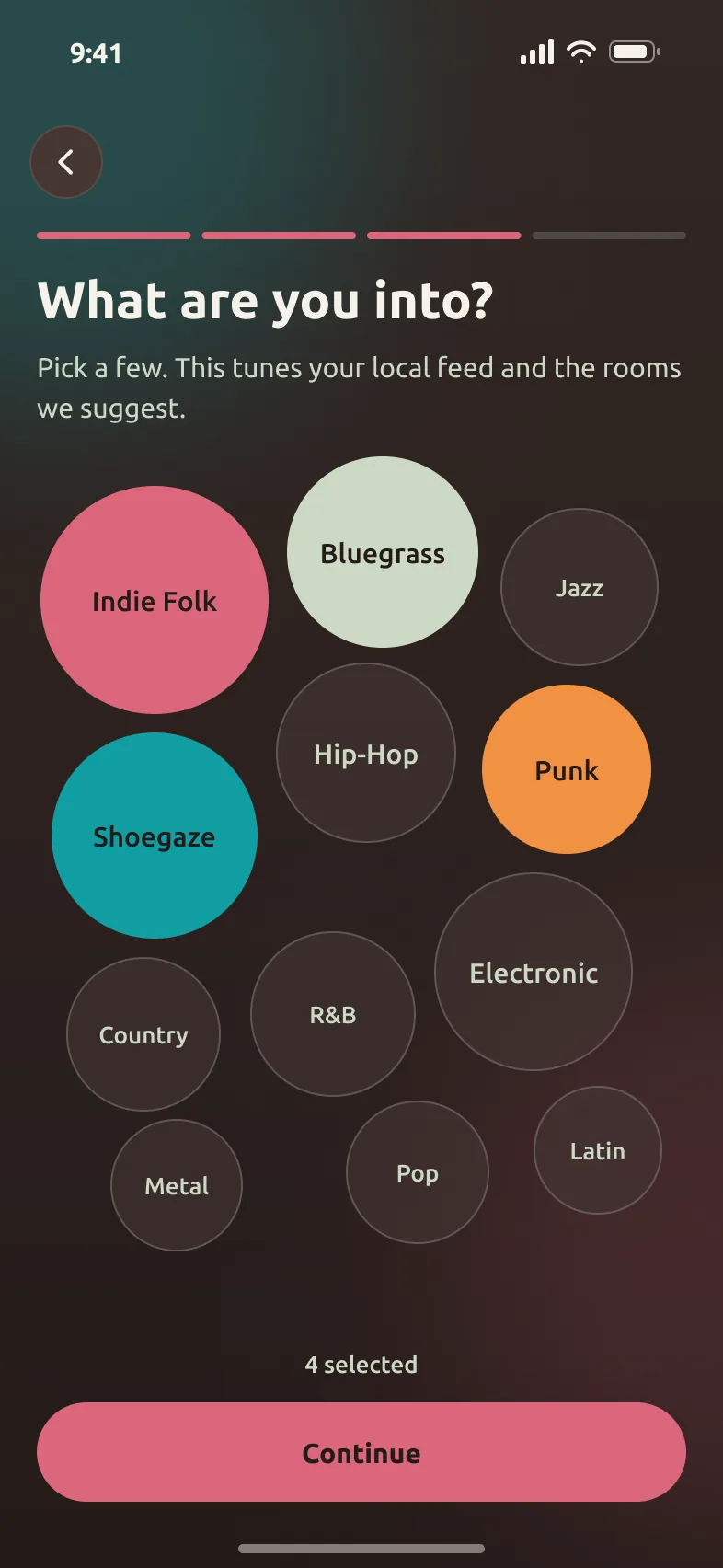
Petri Pick genres screen. Genre bubbles tune the local feed and the rooms Petri suggests.

1.5Pick genres

Genre bubbles tune the local feed and the rooms Petri suggests.

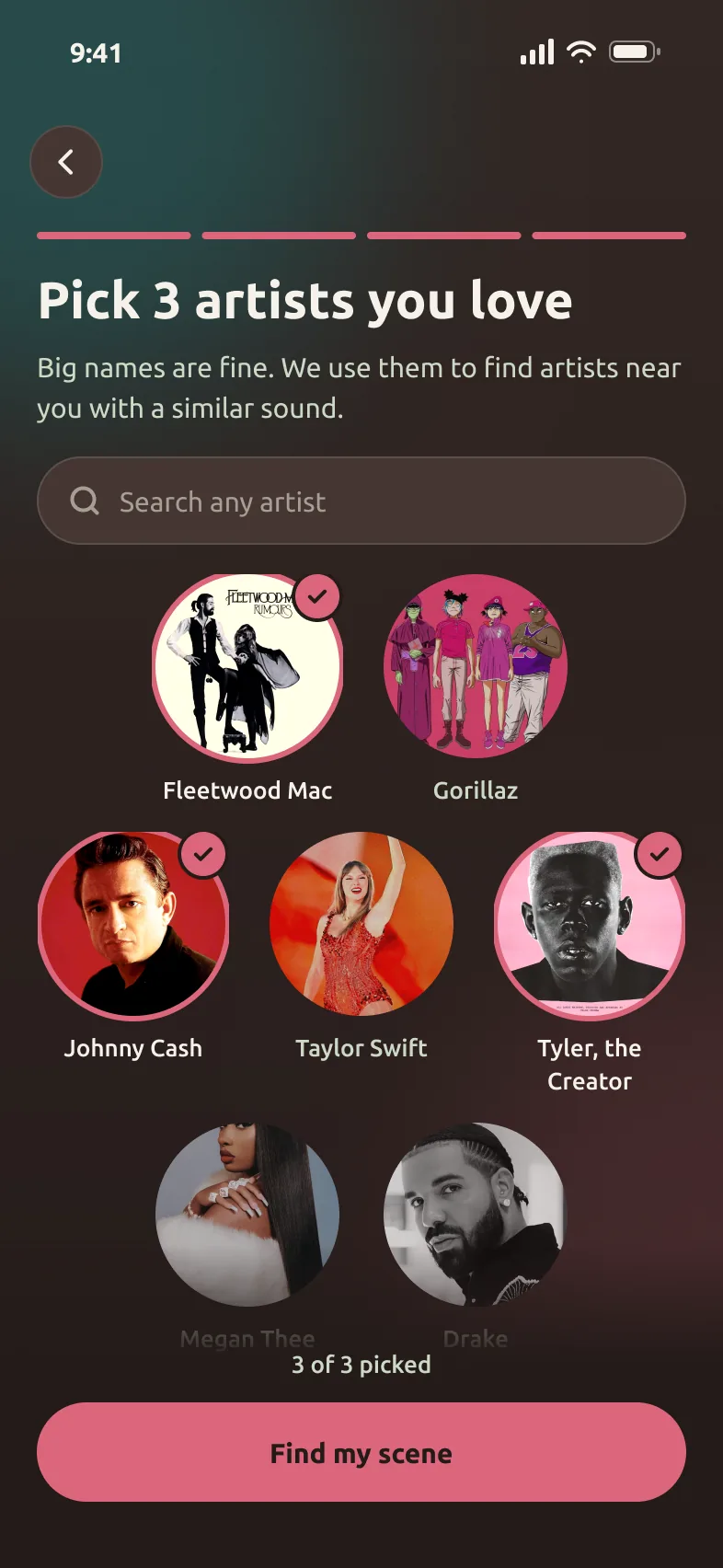
Petri Pick artists screen. Big names are fine. Petri uses them to find local artists with a similar sound.

1.6Pick artists

Big names are fine. Petri uses them to find local artists with a similar sound.

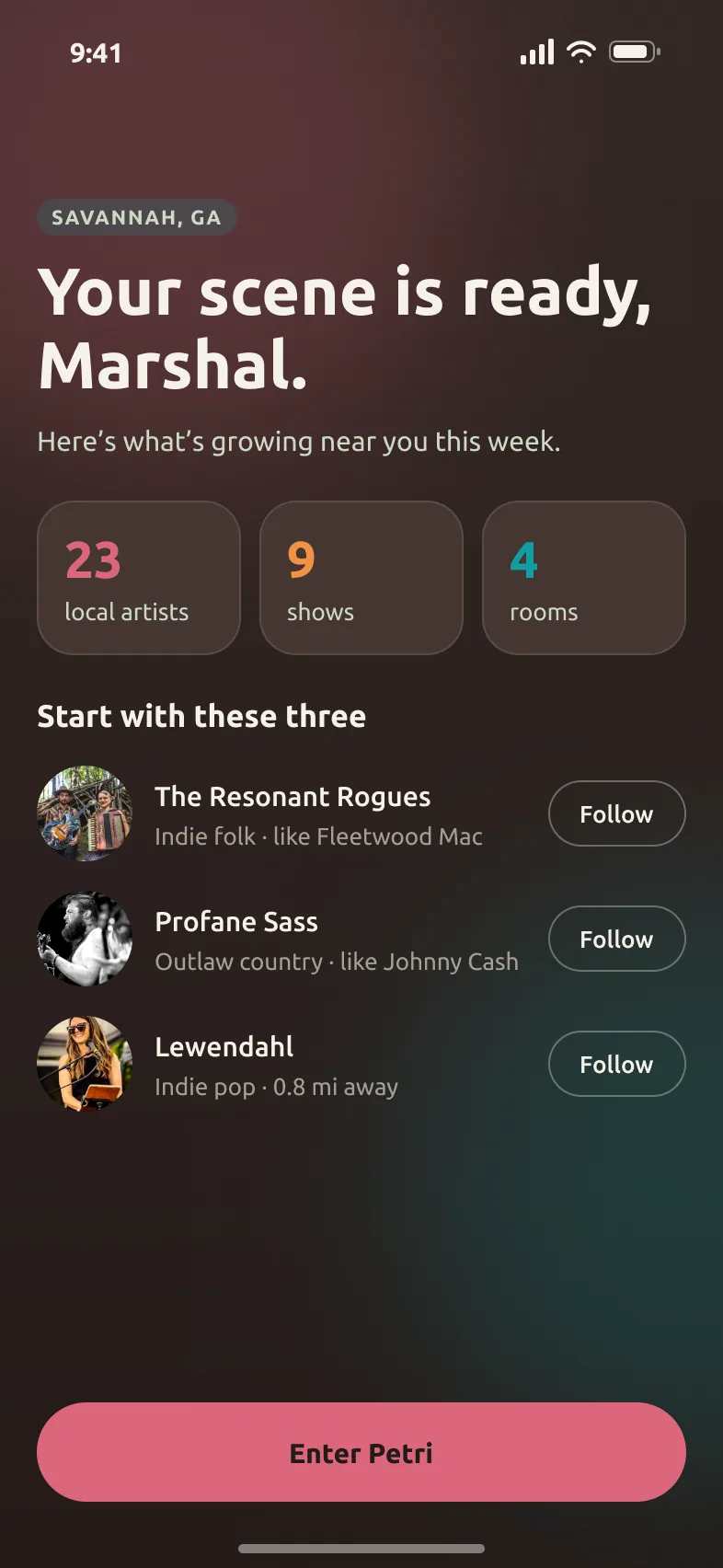
Petri Your scene screen. The payoff: local artists, shows and rooms matched to your picks.

1.7Your scene

The payoff: local artists, shows and rooms matched to your picks.

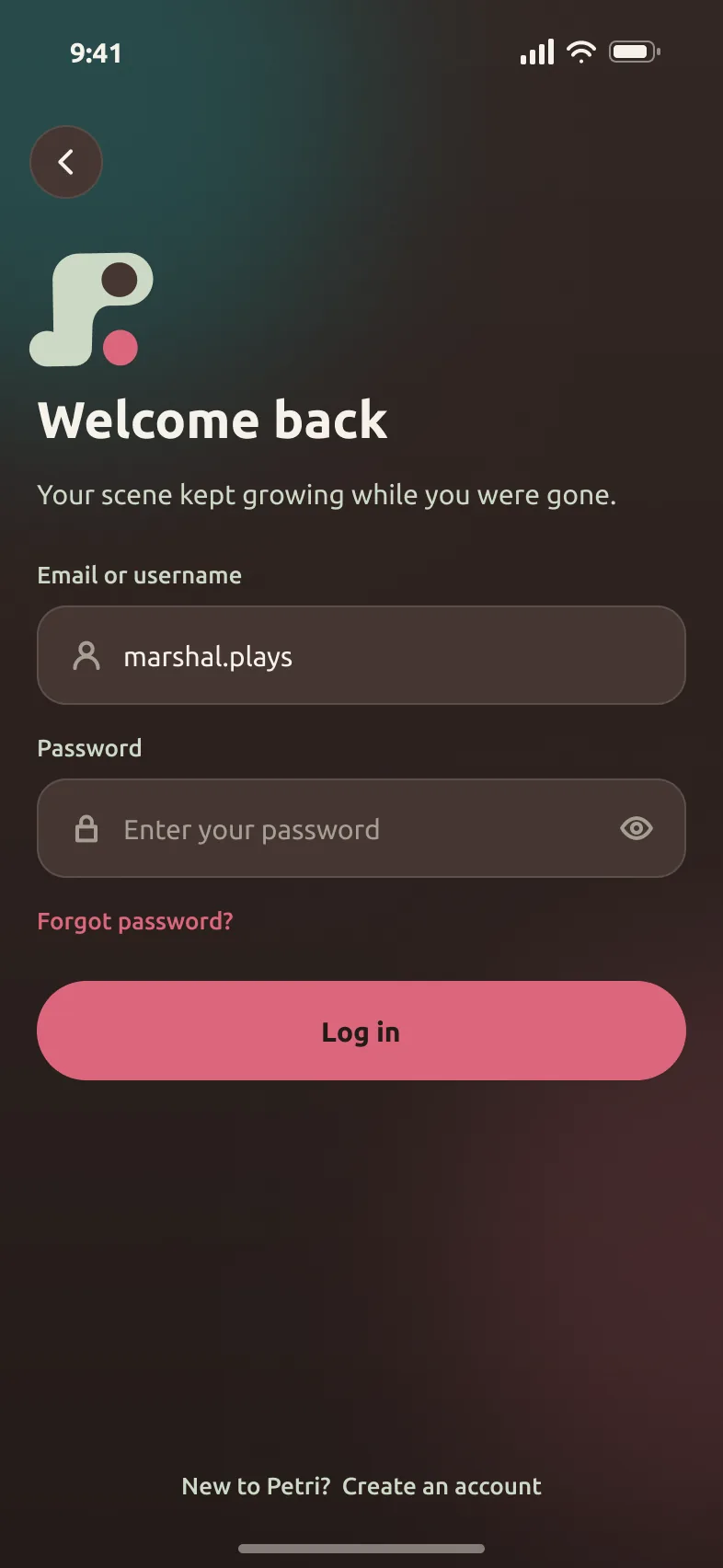
Petri Log in screen. Returning listeners get straight back to their scene.

1.8Log in

Returning listeners get straight back to their scene.

Artist photos and show posters are placeholders carried over from the 2024 file. “The Porch Lights” and the lyrics were made up for these mockups, and all counts and messages are sample content.

Reflection

What I learned, and what I would test next

What I learned

  • Coming back to my own early work showed me how much I had grown. The ideas were good from the start, but basics like labels, hierarchy and spacing made them much easier to use.
  • A consistent system does a lot of quiet work. Rebuilding type, buttons and cards once made every screen clearer.
  • Designing for two roles in one account meant thinking about the same person on both sides of the app.

What I would test next

  • Can listeners aged 16 to 24 find a show happening tonight and send it to a friend?
  • Do labeled tabs help people find Shows faster than the 2024 icon bar? A first click test would tell.
  • Would small musicians like the two we interviewed check the artist dashboard every week?

About the 2026 screens

  • I rebuilt Petri after the class ended, using what I had learned since. The 2024 final above is what the team presented.
  • Numbers, chats and stats in the screens are placeholders.